

Prologue
He first tasted the Atlantic’s cold salt on his tongue when smuggled in the hold of a Haitian cargo sloop. That night, the slave traders never saw them slip overboard and tumble like shadows into the black water, the youngest clinging to the mother’s back, the father’s hands webbed with wounds from cutting the ropes. The family’s first American sunrise was a fever dream: the Carolina dawn, pale and shivering, an inlet so still it seemed to hold its breath.
A year later, after a furtive existence hunting and gathering among the mangroves outside the small fishing village of Coral Cove, a simple act—one that anyone would do—changed their lives a simple act for over a century to come. The local gentry all knew the story—though none told it quite the same way. Some say the parents bartered their lives for a single pearl, others, who know, insist it was the rescue of a colonist’s child from the grip of mangrove roots, the child blue-faced and limp, prying her loose and breathing life back into her lungs.
The truth, as always, is tangled and feral: a transaction, and a pact that delivered the family from the block to the briny edges of freedom. That act of kindness led a grateful colonial family to “purchase” his parents and the child for a percentage of their fishing spoils and three hogs, raised and slaughtered each year. The slave family had paperwork protecting them from slave hunters and they built a cabin of sod, metal scraps and driftwood along the edge of the mangroves. The arrangement worked well for the colonial family with abolitionist sympathies; they had the best seafood and pork on their dining tables year-round. Over time, a genuine friendship grew between the families continuing for generations lasting until and after emancipation.
CHAPTER ONE
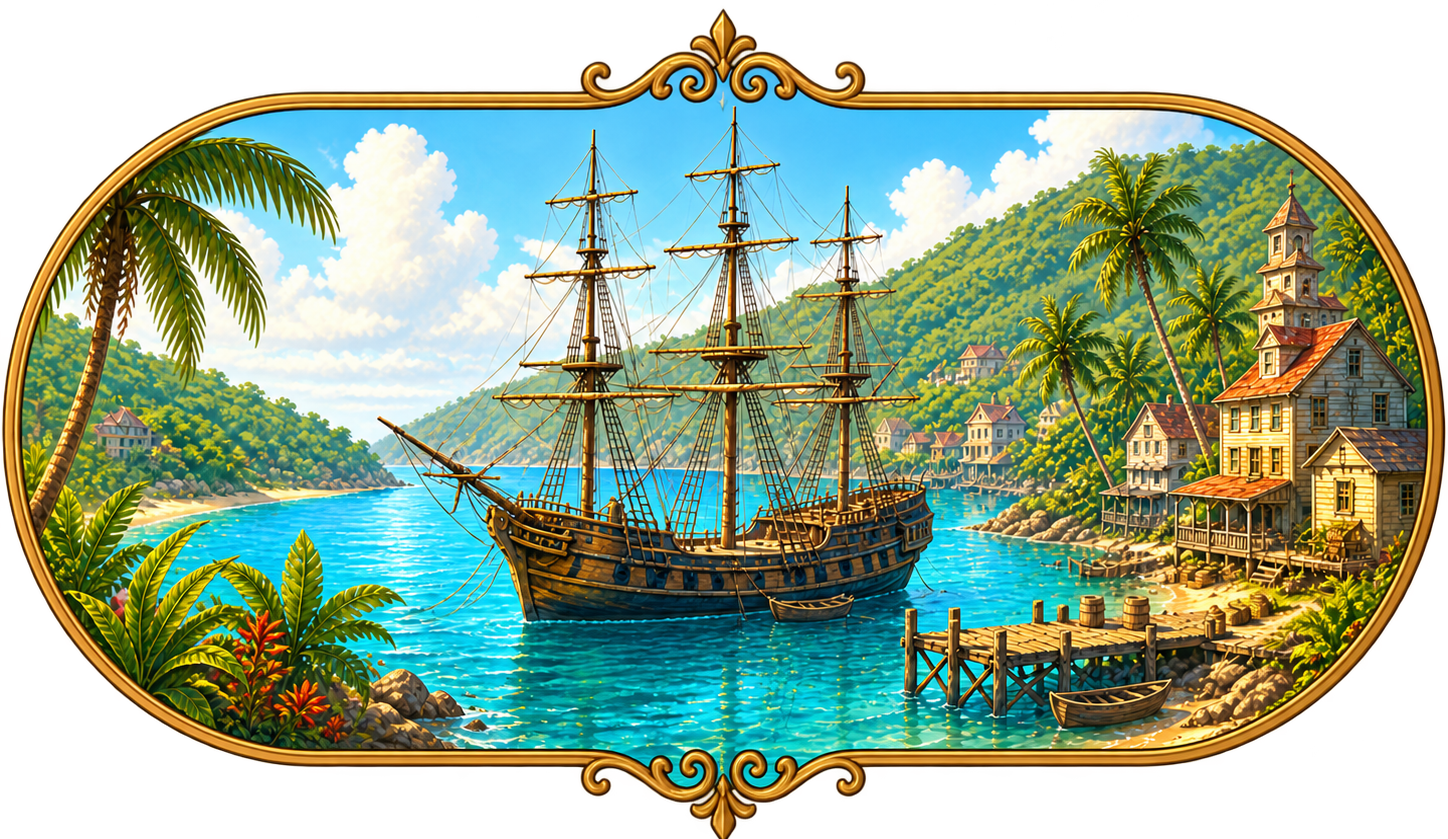
1710 North Carolina Coast
With salt-crusted clothes and skin burnished dark by Caribbean sun he slips between the tangled roots of mangroves and moves with stealth borne of years of experience. The frayed edges of his once-white shirt flutter against skin scarred by rope burns and old battles. His bandana, faded from indigo to the color of twilight, clings damply to his neck while his tar-stained seaman’s hat shields watchful eyes. Each step is calculated—a hunter’s tread that barely disturbs the brackish water around his ankles. He held his breath when passing within earshot of his family’s dwelling, the smoke from their kitchen fire carrying familiar spices that made his stomach clench with longing. He dared not approach them, for Governor Spotswood’s men have posted broadsides bearing crude renderings of his Captain’s bearded face in every port from Norfolk to Nassau.
The weight of reality pressed on him like the humid air. The golden age of privateering has ended with the stroke of a quill in some distant European palace. Those precious letters of marque—documents that transformed piracy into patriotic duty—would no longer protect men like him who had made their living seizing Spanish galleons heavy with Peruvian silver and Mexican gold destined for royal coffers across the Atlantic.
Also gone were the days when Blackbeard’s black flag struck terror into the hearts of merchant captains, when the mere whisper of his name sent men scrambling to hide their gold, tobacco, and women. Benoitz Jackson—now known only as “Benjie”—had witnessed the pirate king’s ruthlessness firsthand after being recruited from the docks of Coral Cove. His calloused hands still smelled of fish guts when Blackbeard himself clasped his shoulder and promised him riches beyond imagination.
The blood and grog-soaked democracy of Blackbeard’s ship had seduced him completely. While the royal navies flogged men to death for minor infractions, Blackbeard let his crew vote on targets and split the spoils fairly—though God helped any man who challenged him in battle. Three years of cutlass fights and cannon fire had hardened the once-naive young fisherman into a man whose eyes never fully closed, even in sleep.
Benjie’s value to the crew transcended mere loyalty and his ability to fight. His fingers could read the stars like Braille on the blackest nights, guiding them through treacherous waters that had claimed dozens of naval vessels.
It began as Blackbeard had once pressed a ruby-hilted dagger to Benjie’s throat, drawing blood while whispering that he’d kill him before letting the Crown’s men learn his secret passages through Coral Cove’s deadly maze of reefs. The youth who became known as Benjie, stood firm. Not belligerent but not quaking as so many others had done. Blackbeard smiled, held the boy firmly, but removed the dagger. “Not afraid, huh?”
“Oh, plenty O’ fear, uh sir, but showing it don’t help.” “Right you are,” said Blackbeard as he pointed to a nearby log along the shore of Coral Cove.
Blackbeard smiled, “Sit with me.”
That encounter began a years-long friendship between the boy and the fearsome captain.
Benjie’s heart hammered against his ribs as he crept through the dense mangroves, the weight of Blackbeard’s final payout heavy in the large leather pouch tucked inside his salt-stained shirt. The gold —Spanish doubloons and English sovereigns and large bits of smelted, raw gold—pressed against his skin with each careful step through the sucking mud. Sweat trickled down his neck as he glanced over his shoulder, imagining redcoats lurking behind every twisted trunk. He couldn’t risk his family knowing about this treasure; the Governor’s men had ways of extracting information that turned his stomach cold. The thought of his mother’s weathered face contorted in pain, or his young sister being threatened because of his pirate connections, drove him deeper into the shadowy tangle of roots and vines.
He went deep into the mangroves, finding that childhood hiding spot where he’d once played innocent games. Games pretending to be a privateer, honorably serving the crown.
Now braced in the mangroves, his trembling hands worked sail-repair needles through canvas, creating a secret pouch in his seabag. When he joined the crew, he purchased a new seabag with his first allotment of booty. Many on the crew used cheap cotton bags for their belongings and stash. The booty they held rarely lasted longer than shore leave in the next port.
But Benjie had a different vision. He sought the best seabag he could find. Not flashy, but strong and as waterproof as the combination of tightly woven waxed canvas, leather, and clever design could make it. The seabag served its purpose well and he kept it close for his years on Blackbeard’s crew.
He thought about providing for his family often during the tense moments before an attack and then after as he attended to wounded crew and made repairs to the ship. Those thoughts helped him keep his balance when the violence of his trade overwhelmed him.
Would this bounty protect his family or endanger them more? The King’s navies were ruthless—they’d killed men for much less than what jingled between his fingers. Sweat stung his eyes as mosquitoes feasted on his neck. A water moccasin slithered nearby, making him flinch, but paying him no mind. Hours passed as he sewed, then hesitated before each gold coin dropped inside. Blood money or freedom? He secured them tight so they’d make no sound, even if the seabag were tossed about, but couldn’t silence his own doubts.
He then created a waterproof hiding spot in the tangle of mangrove roots. His hands moved with practiced precision, first laying down broad palmetto leaves as a moisture barrier, then weaving dried sea grasses into a tight basket-like structure. He packed red clay soil around the edges, tamping it down with the heel of his palm just as his granddaddy had shown him years ago by moonlight. As former slaves, his family had developed an artistry in concealment—burying possessions, messages, even themselves when necessary. Benjie’s fingers remembered every lesson, working the materials until the cache became invisible, indistinguishable from the natural tangle of the coastal wilderness.
He circled the hide like a predator, scrutinizing every leaf, every shadow. He studied the marks left over the years by the highest tides. His heart hammered against his ribs. Perfect. Undetectable. When Blackbeard’s hunters finally gave up their bloodthirsty chase, he’d retrieve this treasure—his family’s salvation. Not for him the fleeting pleasures other pirates squandered their gold on; his dreams burned fiercer. This fortune would tear his bloodline free from poverty’s jaws forever. His father could retire from commercial fishing before he found an early death in that dangerous trade as so many had. His mother would never again bend her back for white men’s washing. His younger sisters would never have to sell their dignity for bread. He sensed the gold pulse in the earth like a buried heart.
Benjie’s weathered hands trembled slightly as he thought of Blackbeard—not hanging from a yardarm with crows pecking at his infamous beard as rumor had it, but alive, perhaps lounging beneath a palm tree on some distant shore beyond the reach of British cannons. The great captain’s disappearance for a few years would serve as effectively as his death; the King’s men and Virginia governor’s bloodhounds would eventually lose interest as wars and politics inevitably diverted their attention from the hunt for pirates. At least that was Benjie’s abiding hope.
Standing knee-deep in brackish water, Benjie recalled his final moments with Blackbeard—the captain’s coal-black eyes gleaming beneath heavy brows as they clasped forearms in farewell aboard Queen Anne’s Revenge. That was a month ago, before Benjie slipped away on a nearby island and hitched passage with salt-crusted fishermen who remembered him from his youth. He told them he had been working in Cuba on island transports and that he was on his way south to Mexico, hoping his hour with them would be soon forgotten.
He cast one final glance at the hiding place, memorizing every twisted tree and outcropping nearby, memorizing the unique pattern of the twisted natural sculpture that held his treasure. Then he melted into the dense mangrove forest, the humid air clinging to his skin as he set his course for Colombia, the taste of salt and freedom on his lips.